
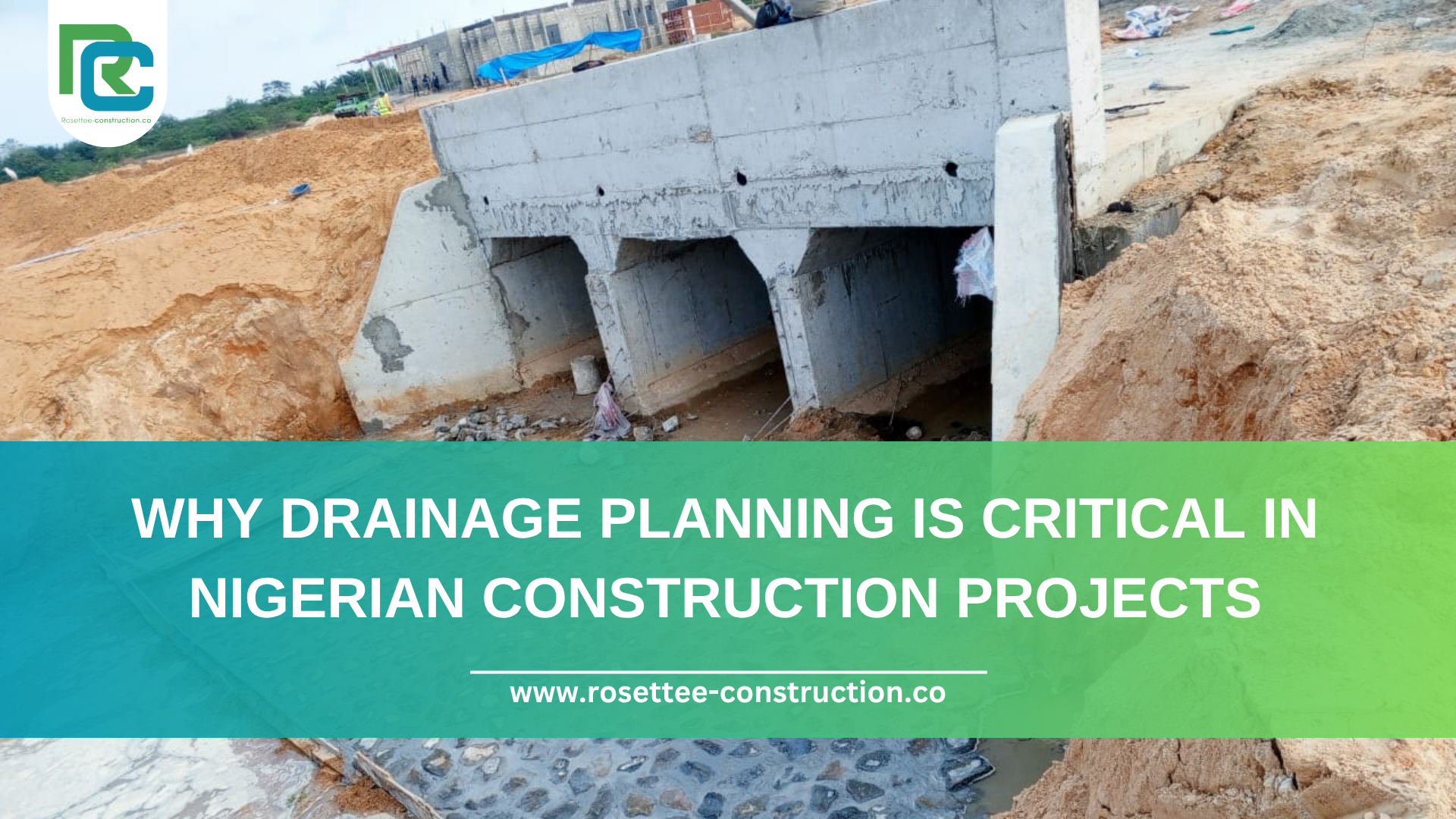

In construction, what people see first is usually the building itself. They notice the walls, roofing, finishing, paintwork, tiles, windows, doors, and the general beauty of the project. But behind every strong and lasting structure lies a hidden system that determines whether the building will remain safe, functional, and valuable over time. One of the most important of these systems is drainage.
Drainage planning is not just about moving water away from a building. It is about protecting the structure, the foundation, the surrounding land, the access roads, the safety of occupants, and the long-term value of the entire project. In a country like Nigeria, where heavy rainfall, poor urban drainage systems, flooding, erosion, and varying soil conditions are common challenges, drainage planning is not optional. It is critical.
For homeowners, developers, businesses, institutions, and government projects, proper drainage should be considered from the earliest stage of construction planning. When drainage is treated as an afterthought, the consequences can be expensive, dangerous, and sometimes irreversible. At Rosettee Construction, we believe that every strong project begins with proper planning, and drainage is one of the key areas where good planning protects both people and investment.
What Is Drainage Planning in Construction?
Drainage planning is the process of designing how water will be collected, directed, controlled, and safely discharged from a construction site or a completed building. This includes rainwater from roofs, surface water from paved areas, groundwater around the foundation, wastewater systems, and stormwater flowing through or around the property.
In simple terms, drainage planning answers important questions such as the following:
- Where will rainwater go when it falls on the roof?
- How will water move away from the foundation?
- Will water collect around the building during heavy rainfall?
- Can the soil absorb water properly?
- Is the land sloped correctly?
- Where will surface runoff be discharged?
- Will the drainage system affect neighbouring properties?
- Can the drainage handle intense Nigerian rainfall?
A professional drainage plan considers the site layout, soil type, slope, rainfall pattern, road level, building position, foundation design, landscaping, and existing public drainage systems. It also ensures that the drainage solution is practical, durable, and suitable for the environment.
Also Read: What is Soil Investigation
Why Drainage Planning in Nigerian Construction Matters
Nigeria has different environmental and construction challenges across its regions. Some areas are low-lying and flood-prone. Some have clay soil that holds water for a long time. Some experience erosion. Others have blocked or inadequate public drainage systems.
Cities such as Lagos, Port Harcourt, Benin, Ibadan, Abuja, Calabar, and many fast-growing urban areas face drainage-related issues during the rainy season. In many cases, buildings are constructed without fully considering how water will behave around the site.
This can lead to problems such as:
- Flooded compounds
- Cracked walls
- Weak foundations
- Damp interiors
- Mold growth
- Damaged roads and pavements
- Soil erosion
- Unsafe walkways
- Expensive repairs
Water may look harmless, but when it is uncontrolled, it can quietly damage a building over time. That is why drainage planning should begin before construction starts, not after problems appear.
Drainage Protects the Foundation
The foundation is the most important part of any building. It carries the weight of the entire structure and transfers that weight safely to the ground. If the foundation is affected, the whole building is at risk.
Poor drainage is one of the major causes of foundation problems. When water collects around the foundation, it can soften the soil, create uneven settlement, and increase pressure against the foundation walls. In areas with clay soil, water can cause the soil to expand. When the soil dries, it shrinks. This repeated expansion and shrinkage can put stress on the foundation and lead to cracks.
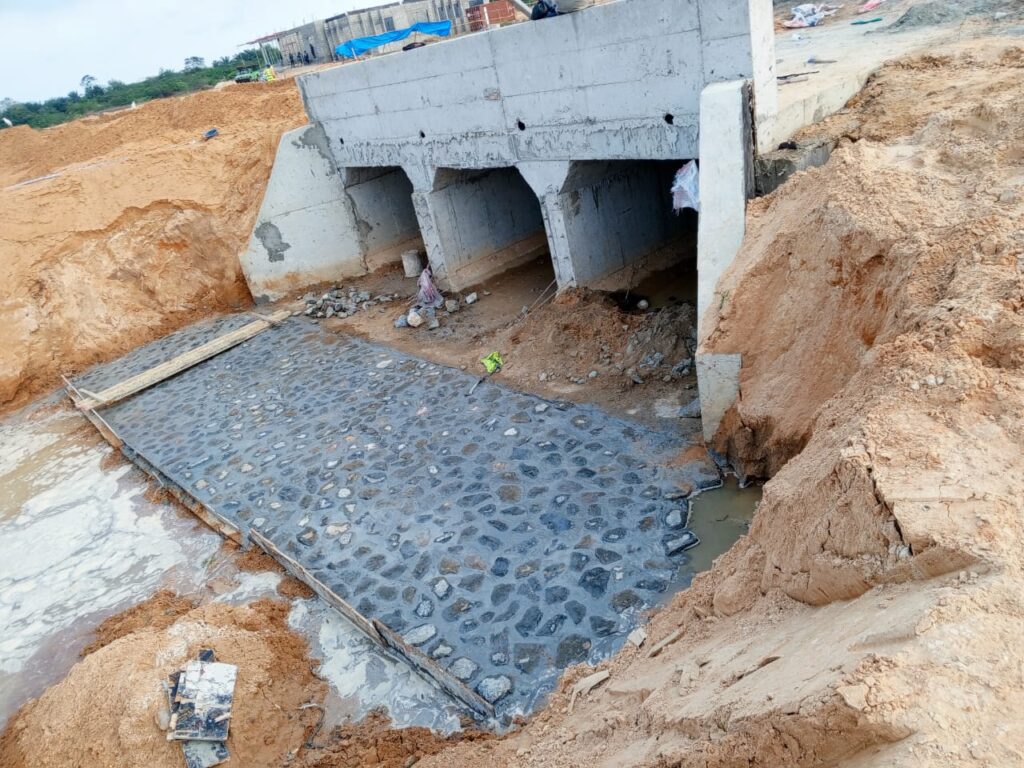
In some Nigerian sites, especially where the soil is weak or the water table is high, drainage must be carefully designed to prevent water from staying around the foundation. This may involve proper site grading, perimeter drains, soakaways, culverts, channels, gutters, and other engineering solutions.
A strong foundation is not only about concrete and reinforcement. It is also about controlling the environment around the foundation. Without proper drainage, even a well-built foundation can face long-term problems.
Drainage Helps Prevent Flooding
Flooding is one of the most common construction and property challenges in Nigeria. Many areas experience flash floods during heavy rainfall because of blocked drains, poor road levels, inadequate public drainage, or uncontrolled urban development. For buildings in flood-prone areas, drainage planning must be taken seriously.
A properly planned drainage system helps reduce the risk of water entering the building, flooding the compound, damaging external works, or making the property inaccessible. This is especially important for residential estates, schools, hospitals, factories, warehouses, shopping complexes, and office buildings where daily operations depend on safe access.
Flooding can damage electrical systems, furniture, documents, equipment, floors, walls, and stored goods. In commercial and industrial facilities, flooding can lead to business interruption and financial loss. In residential buildings, it can create discomfort, health risks, and repeated repair costs.
Good drainage planning does not mean that a site will never experience water during extreme rainfall. It means the project is designed to manage water properly, reduce risk, and recover quickly after heavy rain.
Drainage Reduces Dampness and Mould Problems
One common problem in buildings with poor drainage is dampness. Dampness occurs when moisture enters walls, floors, or other building elements. It can show up as peeling paint, stained walls, musty smells, swollen wood, damaged ceilings, or mould growth.
In Nigeria’s humid climate, dampness can become a serious issue if drainage is not properly handled. When water remains close to the building, moisture can rise through walls or seep into internal spaces. Poor roof drainage, blocked gutters, bad slope design, and lack of proper external drainage can all contribute to this problem.
Mould and dampness not only affect the appearance of a building. They can also affect indoor air quality and make the space uncomfortable for occupants. For commercial buildings, dampness can damage brand image and reduce property value. For homes, it can create repeated maintenance stress.
Proper drainage helps keep water away from the building envelope. It allows walls, floors, and surrounding areas to remain dry and stable, improving comfort and reducing maintenance problems.
Drainage Protects Roads, Pavements, and External Works
A construction project is not complete because the main building is standing. External works are also important. These include driveways, walkways, parking spaces, estate roads, landscaping, fences, and open areas.
When drainage is poor, water can damage these external areas quickly.
Common effects include:
- Potholes
- Sinking interlocks
- Cracked pavements
- Washed-away soil
- Damaged landscaping
- Waterlogged parking spaces
- Weak road bases
- Muddy access routes
This is especially important for estates, factories, schools, hospitals, warehouses, shopping complexes, and office buildings where vehicles and people move around daily.
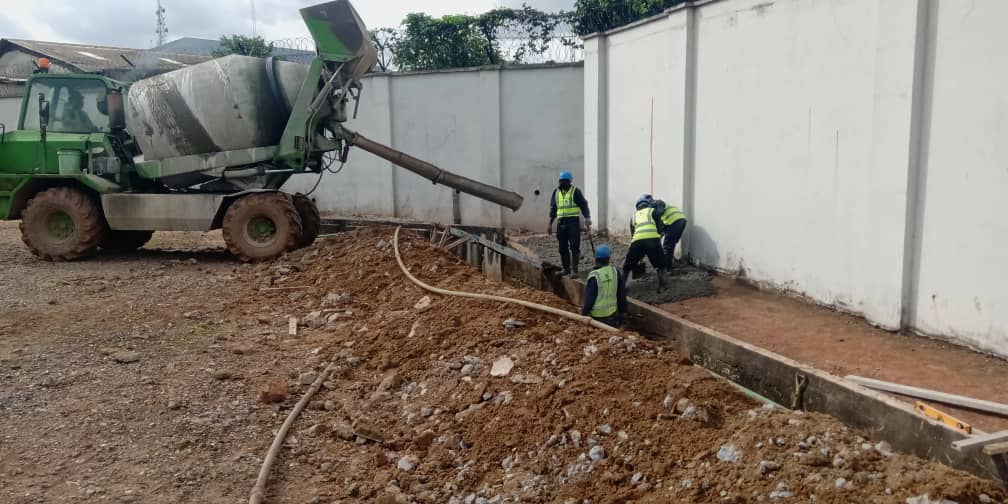
Proper drainage helps preserve the value and usability of the entire property, not just the main building.
Drainage Helps Control Erosion
Erosion is another major issue in many parts of Nigeria. When water flows uncontrolled across a site, it can wash away soil, undermine structures, damage landscaping, and create dangerous gullies. Sites located on slopes are particularly vulnerable.
Drainage planning helps control the speed and direction of water flow. Instead of allowing rainwater to move randomly across the site, a good drainage system channels it safely through designed paths. This may include open drains, covered drains, retaining walls, terraces, culverts, and erosion control features.
For projects in areas with loose soil, sloping land, or high rainfall, erosion control should be part of the drainage strategy. Without this, a site can become unstable, and surrounding properties may also be affected.
Good drainage is not only about protecting one building. It also helps protect the surrounding environment and neighbouring developments.
Drainage Supports Better Site Planning
Drainage planning influences the entire site layout. It affects where the building should be positioned, how the land should be graded, where access roads should pass, where parking should be located, and how landscape areas should be designed.
When drainage is considered early, the project team can make better decisions. The design becomes more practical, and costly corrections can be avoided. But when drainage is ignored until construction is already advanced, the team may be forced to break concrete, redesign external works, or create emergency solutions that may not perform well.
Professional site planning considers water movement from the beginning. It studies the natural slope of the land, the direction of surface runoff, the level of surrounding roads, the location of existing drains, and the best discharge points. This allows the project to work with the land, not against it.
Poor Drainage Increases Maintenance Costs
One of the biggest mistakes clients make is trying to save money by ignoring drainage or using a weak drainage solution. In reality, poor drainage usually costs more in the long run.
When drainage fails, the owner may have to spend money repeatedly on repairs. These repairs can include fixing cracks, repainting damp walls, replacing damaged floors, repairing flooded electrical systems, reconstructing pavements, clearing blocked drains, treating mould, and correcting erosion damage.
In some cases, the cost of fixing drainage problems after construction is much higher than the cost of doing it properly from the start. This is because completed structures, paved areas, and landscaping may need to be broken or redesigned.
Good drainage planning in Nigerian construction is an investment. It protects the project from avoidable damage and reduces future maintenance costs.
Drainage Improves Safety
Construction is not only about beauty and strength. Safety is also a major priority. Poor drainage can create unsafe conditions for both workers and occupants.
During construction, waterlogged sites can increase the risk of slips, falls, equipment instability, and delayed work. Standing water can also create unhealthy conditions and attract mosquitoes. For completed buildings, poor drainage can create slippery walkways, flooded parking areas, weakened boundary walls, and dangerous access routes.
In public buildings such as schools, hospitals, religious centres, offices, and shopping areas, drainage safety is even more important because many people use the property daily. A safe building environment must be dry, accessible, and properly maintained.
By planning drainage properly, construction teams help reduce hazards and create a safer space for everyone.
Drainage Planning Supports Timely Project Delivery
Poor drainage not only affects completed buildings. It can also delay construction. During the rainy season, sites without proper temporary drainage can become waterlogged, making it difficult for workers, equipment, and materials to move efficiently.
Excavations can collapse, foundation works can be delayed, materials can be damaged, and site activities can slow down. This can affect the project timeline and increase costs.
Professional contractors consider both temporary and permanent drainage. Temporary drainage helps manage water during the construction phase, while permanent drainage protects the completed structure. Both are important for project success.
In a country where rainfall can be intense and unpredictable, drainage planning helps contractors keep work moving and reduce weather-related delays.
Key Drainage Elements in Construction Projects
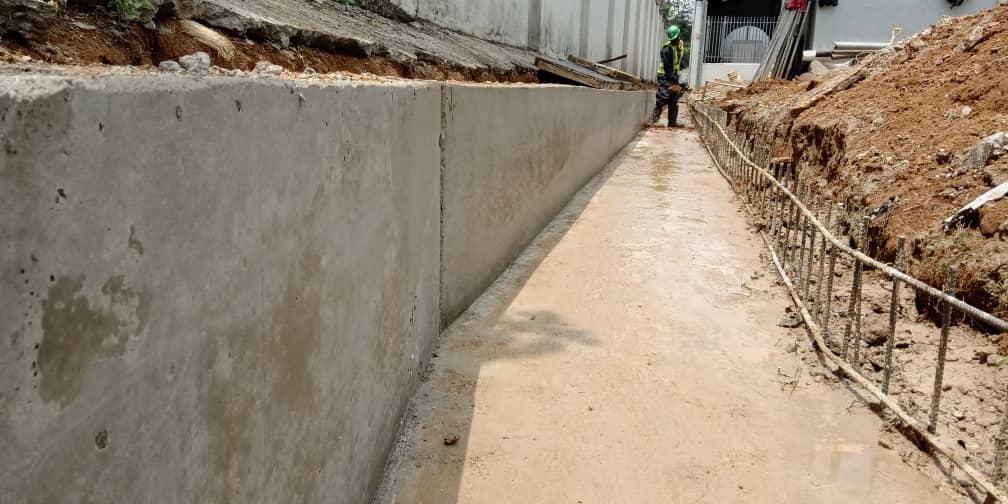
A good drainage system may include several elements depending on the site and project type. These can include roof gutters and downpipes, surface drains, catch basins, soakaways, French drains, culverts, channels, manholes, stormwater pipes, retaining walls, grading, and erosion control features.
The right solution depends on the project. A residential building may require a simpler drainage layout, while an estate, commercial complex, industrial facility, or road project may require more detailed stormwater management.
The goal is always the same: collect water properly, move it safely, prevent flooding, protect the foundation, and discharge water responsibly.
Common Drainage Mistakes in Nigerian Construction Projects
Some drainage problems happen because important details were ignored at the beginning. Common mistakes include:
- Starting construction without a proper site assessment
- Ignoring the natural land slope
- Building lower than road level
- Using undersized drains
- Discharging water into the wrong area
- Failing to consider neighbouring properties
- Poor gutter and downpipe placement
- No maintenance access for drains
- Poor workmanship
- Treating drainage as an afterthought
These mistakes can be avoided when clients involve qualified professionals early.
Why Clients Should Involve Professionals Early
Drainage is not something that should be handled casually. It requires technical understanding, experience, and proper coordination between architects, engineers, contractors, and site supervisors.
Clients should involve professionals early so that drainage can be integrated into the design, cost plan, and construction method. This helps avoid guesswork and reduces the risk of expensive corrections later.
A professional contractor will consider the soil, slope, rainfall, surrounding infrastructure, foundation type, building use, and long-term maintenance needs. This level of planning gives the client confidence that the project is being built to last.
The Rosettee Construction Approach
At Rosettee Construction, we understand that a successful project is not judged only by how it looks at completion. It is judged by how well it performs over time. This is why we pay attention to the details that protect the structure, improve safety, and support long-term value.
Drainage planning is one of those details. Whether it is a residential, commercial, industrial, or infrastructure project, we believe that water must be properly managed from the beginning. Our approach focuses on quality workmanship, practical engineering, site-specific solutions, and responsible construction standards.
We do not see drainage as an afterthought. We see it as part of the foundation of a strong project.
Conclusion
Drainage planning in Nigerian construction projects is critical because it protects the foundation, prevents flooding, controls erosion, reduces dampness, improves safety, protects external works, and lowers long-term maintenance costs. In a country where rainfall, soil conditions, and urban drainage challenges can affect building performance, every serious project must treat drainage as a priority.
A beautiful building without proper drainage is vulnerable. A strong structure with poor water management can still fail over time. But when drainage is properly planned and executed, the project becomes safer, stronger, and more durable.
For clients who want buildings that stand the test of time, drainage planning should begin before construction starts. It should be part of the design conversation, the budgeting process, the site preparation, and the final execution.
At Rosettee Construction, we are committed to building with excellence, delivering with trust, and creating structures that are prepared for real Nigerian conditions.