
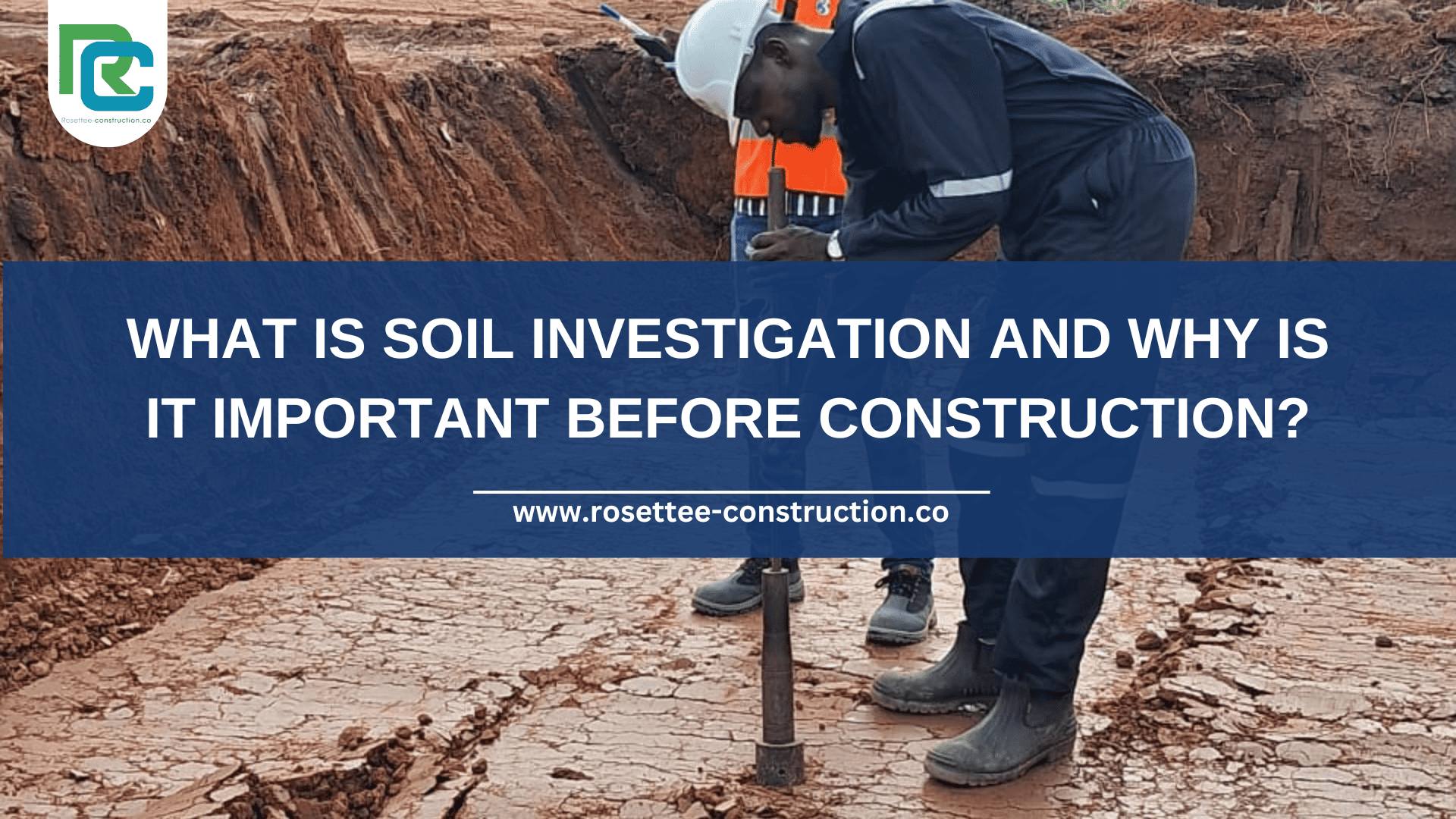

Every successful construction project begins long before the first block is laid or the first foundation is poured. Beneath every building, road, bridge, or infrastructure project lies the ground that must safely support the structure for decades.
Yet many property owners, developers, and investors focus heavily on architectural designs, building materials, and construction costs while overlooking one of the most critical steps in the entire process: soil investigation.
A building is only as strong as the ground beneath it.
Whether you are constructing a residential home, commercial building, industrial facility, road network, or large-scale infrastructure project, understanding the condition of the soil is essential for safety, durability, and cost efficiency.
In this article, we explain what soil investigation is, why it is important before construction, how it is conducted, and the risks of building without one.
What Is Soil Investigation?
Soil investigation, also known as a geotechnical investigation or site investigation, is the process of examining and evaluating the physical and engineering properties of the soil and subsurface conditions at a construction site.
The primary objective is to determine whether the ground can safely support the proposed structure and to provide engineers with the information needed to design appropriate foundations.
A soil investigation typically involves:
- Site reconnaissance
- Borehole drilling
- Soil sampling
- Field testing
- Laboratory testing
- Groundwater assessment
- Geotechnical analysis
- Preparation of a detailed soil investigation report
The findings help engineers understand:
- Soil type
- Soil strength
- Bearing capacity
- Groundwater conditions
- Settlement characteristics
- Potential construction challenges
- Suitable foundation options
Why Soil Investigation Is Important Before Construction
1. Determines the Soil’s Bearing Capacity
One of the most important reasons for conducting a soil investigation is to determine the bearing capacity of the soil.
Bearing capacity refers to the maximum load the ground can safely support without experiencing excessive settlement or failure.
Different soils have different capacities:
- Rock formations generally have very high bearing capacities.
- Dense sand can support significant loads.
- Soft clay often has low bearing capacity.
- Organic soils are generally unsuitable for foundations.
Without knowing the bearing capacity of the site, engineers may under-design or over-design the foundation.
Under-designed foundations can fail.
Over-designed foundations can unnecessarily increase construction costs.
A proper soil investigation ensures the foundation is designed accurately and economically.
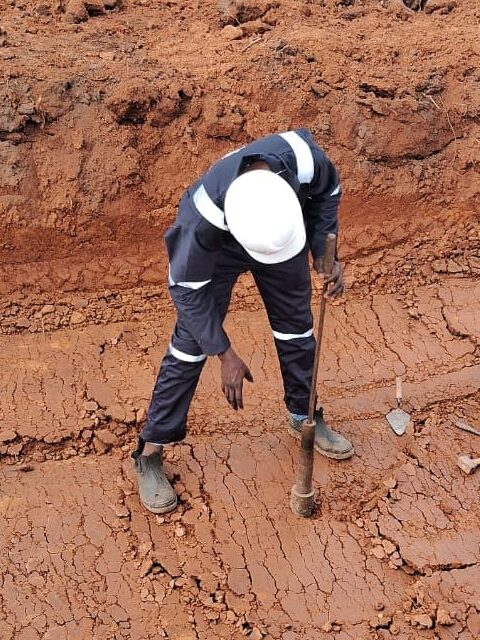
2. Prevents Structural Failure
Many building failures can be traced back to an inadequate understanding of subsurface conditions.
When a foundation is placed on weak or unsuitable soil, the structure may experience excessive settlement, cracking, tilting, foundation movement, structural instability, and partial or complete collapse.
These problems often develop gradually but can eventually become serious safety hazards.
A soil investigation helps identify potential risks before construction begins, allowing engineers to design foundations that can safely withstand site conditions.
3. Identifies Suitable Foundation Types
Not every construction site requires the same type of foundation.
The results of a soil investigation help engineers determine whether to use the following:
Shallow Foundations
Examples include:
- Strip foundations
- Pad foundations
- Raft foundations
These are suitable where the soil near the surface has adequate strength.
Deep Foundations
Examples include:
- Pile foundations
- Drilled shafts
- Caissons
These are often necessary where weak soils exist near the surface, and stronger strata are located deeper underground.
Choosing the wrong foundation type can lead to costly failures and repairs.
Soil investigation ensures the right foundation solution is selected from the start.
4. Reduces Construction Costs
Many people mistakenly believe soil investigations are an unnecessary expense.
In reality, soil investigations often save significant money throughout the project lifecycle.
Without proper investigation, contractors may encounter unexpected conditions such as:
- Soft soil layers
- High groundwater levels
- Buried debris
- Expansive clay
- Unstable ground
These discoveries during construction can result in:
- Delays
- Design changes
- Additional excavation
- Increased material costs
- Higher labor expenses
By identifying these conditions early, project teams can plan appropriately and avoid costly surprises.
5. Evaluates Groundwater Conditions
Groundwater plays a major role in foundation performance and construction activities.
Water beneath the surface can have a significant impact on foundation performance and construction activities. High groundwater levels may affect excavation stability, drainage design, basement construction, and long-term structural performance.
Understanding groundwater conditions before construction begins enables engineers to incorporate appropriate solutions into the project design.
6. Predicts Settlement Risks
Settlement is another concern that soil investigation helps address. While some settlement is normal, excessive or uneven settlement can lead to cracked walls, distorted door frames, uneven floors, and structural damage. Through soil testing and analysis, engineers can estimate how the ground will behave under loading and design foundations that minimise future settlement-related issues.
7. Improves Construction Safety
Construction safety begins with understanding site conditions.
Weak soil, unstable slopes, underground voids, or high groundwater can create hazards for workers and equipment.
A comprehensive soil investigation helps identify:
- Excavation risks
- Slope stability concerns
- Ground collapse potential
- Underground obstructions
By recognizing these hazards early, construction teams can implement appropriate safety measures.
8. Supports Regulatory Compliance
Many local authorities, planning agencies, and regulatory bodies require soil investigation reports before approving construction projects.
These reports provide evidence that:
- The site has been properly assessed.
- The proposed design is appropriate.
- Safety requirements have been considered.
Compliance helps reduce legal and financial risks while ensuring adherence to engineering standards.
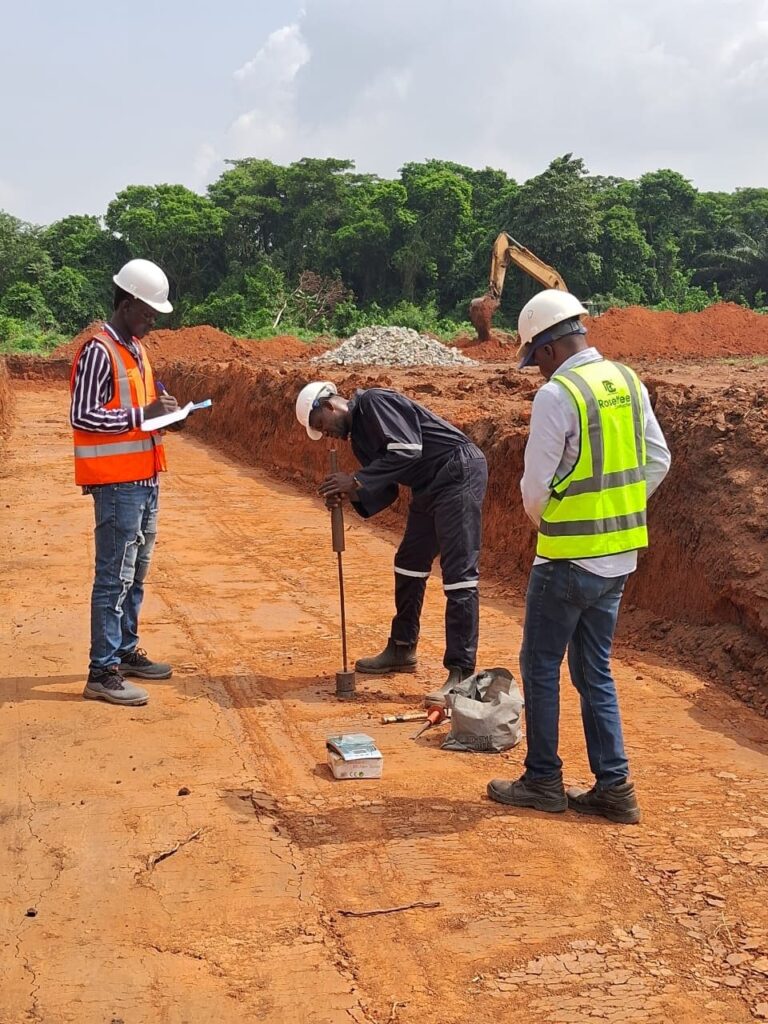
What Happens During a Soil Investigation?
The soil investigation process typically involves several stages.
Site Reconnaissance
Engineers visit the site to observe:
- Topography
- Existing structures
- Drainage conditions
- Surface soil characteristics
- Access constraints
This initial assessment provides valuable context for further investigation.
Borehole Drilling
Boreholes are drilled at strategic locations across the site.
These boreholes allow engineers to examine soil layers beneath the surface and collect samples for testing.
The depth of drilling depends on:
- Project type
- Building height
- Expected foundation loads
- Site conditions
Soil Sampling
Samples are collected from different depths for laboratory analysis.
Testing may include:
- Grain size distribution
- Moisture content
- Density
- Plasticity
- Shear strength
- Compressibility
These properties help determine how the soil will behave under loading.
Field Testing
Several in-situ tests may be performed.
Common examples include:
Standard Penetration Test (SPT)
Measures soil resistance and strength.
Cone Penetration Test (CPT)
Provides continuous information about soil stratification and strength.
Plate Load Test
Evaluates bearing capacity directly at the site.
Laboratory Testing
Samples are tested in controlled laboratory conditions.
Results help determine:
- Engineering properties
- Load-bearing characteristics
- Settlement behavior
- Suitability for construction
Geotechnical Report Preparation
After analysis, engineers prepare a detailed report containing:
- Soil profile
- Groundwater conditions
- Test results
- Bearing capacity recommendations
- Foundation recommendations
- Construction considerations
This report becomes a critical reference document for designers and contractors.
Common Soil Problems Found During Investigations
Soft Clay Soils
Soft clay often has low strength and high compressibility.
Challenges include excessive settlement and foundation instability
Expansive Soils
These soils expand when wet and shrink when dry.
Potential consequences include cracked foundations and structural movement
Loose Sand
Loose sandy soils may settle significantly under load.
In some cases, they may also be susceptible to liquefaction.
High Groundwater Levels
Groundwater can complicate excavation and foundation construction.
Proper drainage solutions may be required.
Organic Soils
Organic soils contain decomposed vegetation and generally have poor engineering properties.
They are often unsuitable for supporting structures without improvement measures.
What Can Happen If You Skip Soil Investigation?
Failing to conduct a soil investigation can result in serious consequences.
These include:
Foundation Failure
Weak soil may not support building loads adequately.
Structural Cracks
Uneven settlement can cause visible damage throughout the structure.
Increased Construction Costs
Unexpected site conditions often lead to expensive redesigns.
Project Delays
Construction may stop while engineers assess unforeseen problems.
Legal Liability
Structural failures can expose developers and contractors to significant legal and financial risks.
Reduced Property Value
Buildings affected by foundation issues often experience reduced market value.
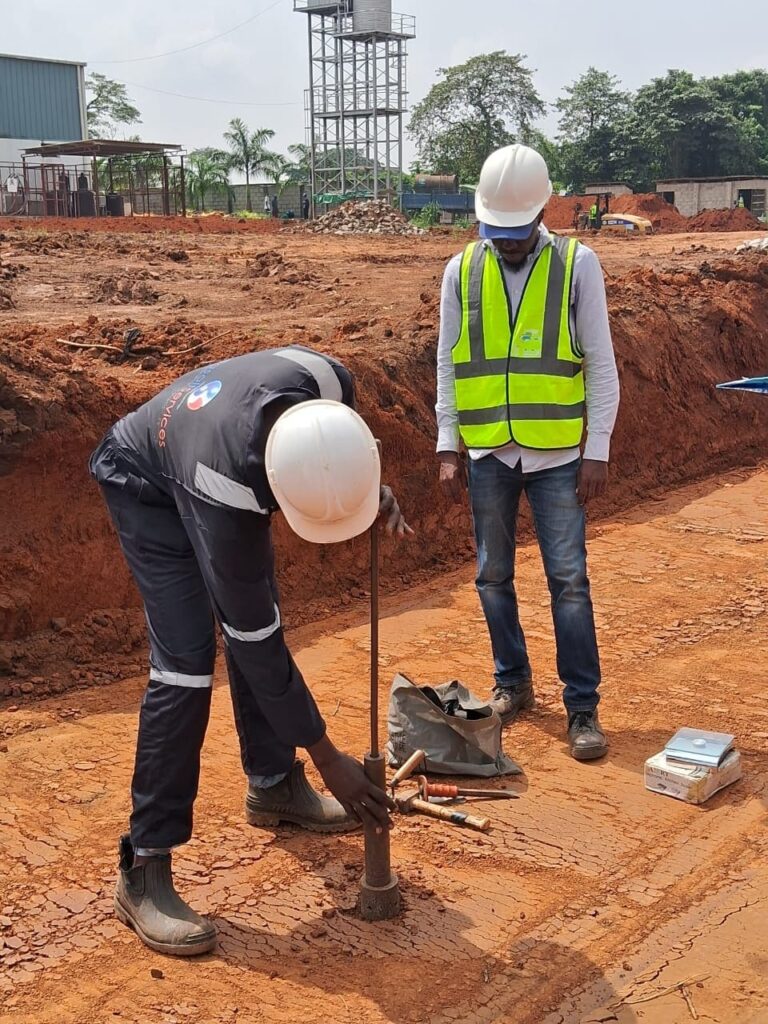
Who Needs a Soil Investigation?
A soil investigation is recommended for:
- Residential developments
- Commercial buildings
- Industrial facilities
- Schools
- Hospitals
- Warehouses
- Roads
- Bridges
- Retaining walls
- Infrastructure projects
Regardless of project size, understanding site conditions is essential.
How Rosettee Construction Approaches Site Assessment
At Rosettee Construction, we recognise that successful construction begins with a thorough understanding of site conditions. While we do not offer soil investigation as a standalone service, geotechnical assessment forms part of our comprehensive project planning and construction approach whenever required.
Our team works closely with qualified geotechnical specialists and engineering professionals to ensure that the necessary site information is available for informed design and construction decisions. By integrating site assessment into our broader project delivery process, we help clients minimise risk, optimise foundation design, and build with confidence.
Our commitment is not simply to construct buildings but to deliver durable, safe, and high-performing structures that stand the test of time.
Conclusion
Soil investigation is one of the most important steps in the construction process. It provides essential information about the ground beneath a proposed development, enabling engineers to design appropriate foundations, manage risk, improve safety, and control costs.
Without a clear understanding of subsurface conditions, construction projects are exposed to unnecessary uncertainty and potentially costly problems. From foundation design and groundwater management to settlement prediction and regulatory compliance, the benefits of soil investigation extend throughout the entire life cycle of a project.
At Rosettee Construction, we believe that successful projects begin with informed decisions. By ensuring that site conditions are properly understood and incorporated into the planning and construction process, we help our clients lay the groundwork for long-term success.