
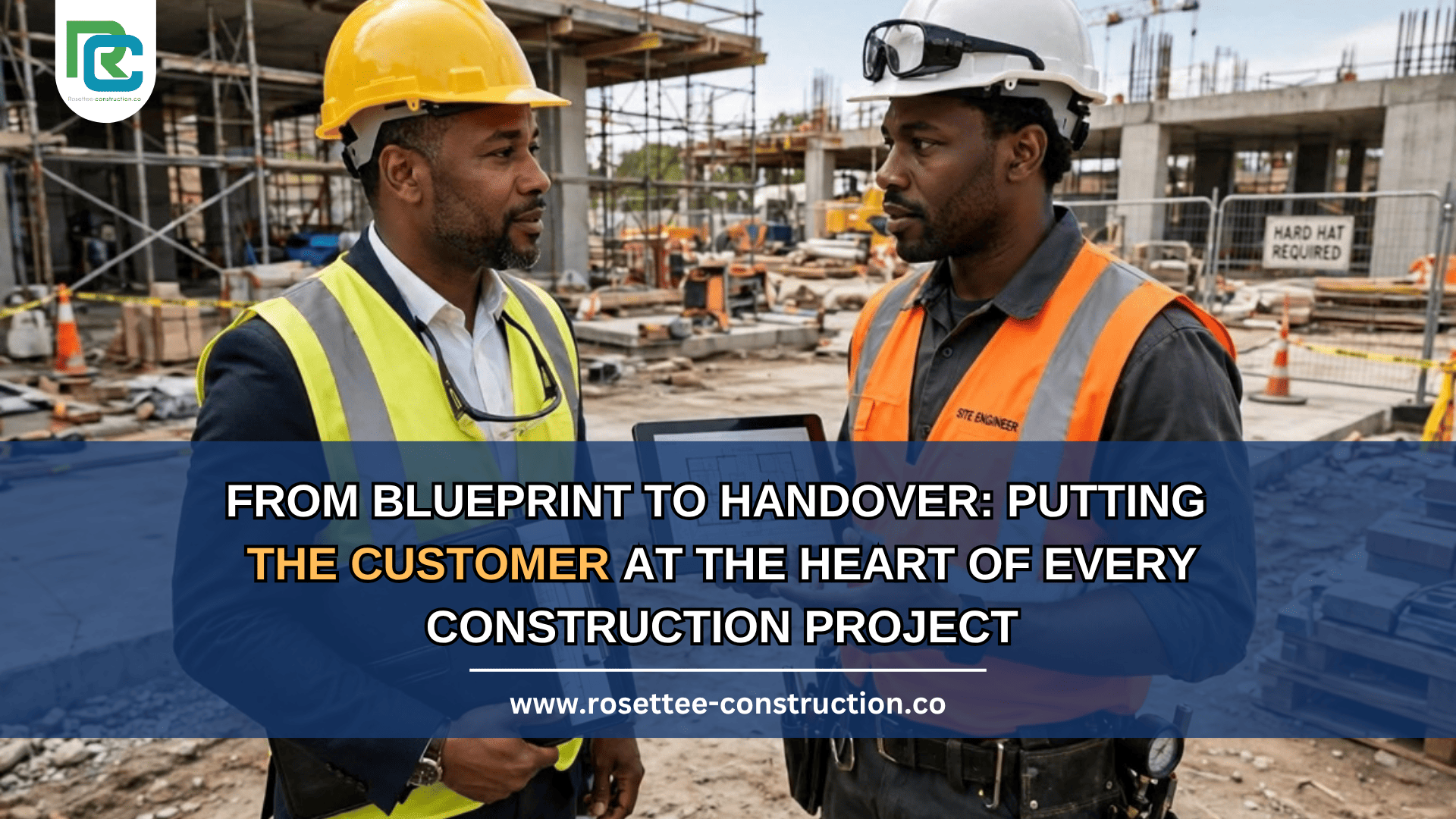

Every completed building begins long before construction equipment arrives on site.
It begins with an idea.
A client may envision a new home, commercial development, office space, industrial facility, or other infrastructure. At that early stage, the project may exist only as a conversation, a sketch, a set of requirements, or a picture in the client’s mind.
Turning that vision into a completed structure requires technical expertise, planning, coordination, materials, people, and time.
But there is another element that should remain at the centre of the process from beginning to end:
The customer.
In construction, it’s easy to focus so much on drawings, schedules, materials, measurements, and deliverables that we forget the person behind the project.
Yet successful construction is not simply about completing a structure.
It is about delivering the right structure for the right purpose while giving the client confidence throughout the journey.
As we celebrate Customer Service Week 2026 and its theme, “The Extra Mile”, it is a timely reminder that excellent customer service in construction should not be limited to a department or a conversation.
It should be built into the entire project lifecycle.
From the first discussion to the final handover, every stage is an opportunity to listen, communicate, solve problems, protect quality and strengthen trust.
At Rosettee Construction, we believe the best construction experiences happen when the client is not standing outside the process wondering what is happening.
They are at the heart of it.
The Customer Journey Begins Before the Blueprint
Before there is a blueprint, there is usually a need.
A client may know what they want to build, but understanding why they want to build it is equally important.
What problem should the project solve?
How will the finished space be used?
What are the client’s priorities?
What are the budget considerations?
What timeline is important to them?
Are there specific expectations around quality, functionality, aesthetics, maintenance or future expansion?
These conversations form an important foundation for customer-focused construction.
When a construction team listens carefully at the beginning, it becomes easier to make decisions that remain aligned with the client’s objectives later.
This is where going the extra mile begins.
Not with concrete.
Not with steel.
Not with machinery.
With listening.
A good construction partner should not simply wait for instructions. The team should ask thoughtful questions, identify potential gaps and help the client understand the implications of important decisions.
Sometimes the most valuable service a construction professional can provide is helping a client see something they had not yet considered.
1. Consultation: Understanding the Vision
The first stage of a successful client experience is understanding what success looks like to the client.
Two clients could commission similar buildings but have completely different priorities.
One may be particularly concerned about cost efficiency.
Another may prioritise durability.
Another may need to meet a specific completion timeline.
Another may place significant importance on aesthetics, flexibility or long-term functionality.
This is why assumptions can be dangerous.
A customer-focused construction process begins by establishing clear expectations.
The consultation stage provides an opportunity to discuss the client’s objectives, scope, constraints and priorities before major decisions are made.
It is also an opportunity for the construction team to provide professional guidance.
Excellent service does not mean agreeing with everything a client says.
Sometimes, going the extra mile means explaining why a particular idea may create problems later and recommending a better alternative.
That conversation should be handled with respect, clarity and professional reasoning.
Ultimately, good consultation creates alignment.
And when the client and project team begin with the same understanding, the rest of the journey has a stronger foundation.

2. Planning: Turning Expectations Into a Clear Roadmap
Once the vision is understood, it has to become actionable.
This is where planning becomes critical.
Construction projects involve interconnected decisions around design, budgeting, procurement, scheduling, logistics, labour, safety, quality and site operations.
Weak planning in one area can eventually affect several others.
For the client, however, the process should not feel like an overwhelming collection of technical activities.
Good construction project management translates complexity into a clear direction.
Clients should understand the major stages of their project, the decisions they need to make and the expectations associated with each stage.
Where possible, potential risks should also be identified early.
This is another important expression of customer service.
A construction company should not only respond to problems after they happen. Experience should help the team anticipate potential challenges and prepare accordingly.
Going the extra mile during planning means asking:
What could affect this project later?
What can we address now?
What does the client need to understand before we proceed?
How can we make the process smoother?
A well-planned project gives both the construction team and the client greater clarity.
3. Communication: Keeping the Client Connected to the Project
One of the most important parts of the client experience in construction is communication.
Construction can be highly technical.
Clients may not understand every engineering decision, site activity or construction term, and they should not have to become construction professionals simply to understand what is happening with their investment.
It is the responsibility of the project team to communicate relevant information clearly.
Clients need to know how the project is progressing.
They need to understand important changes.
They need to know when their input or approval is required.
And when challenges arise, they need honest information about what has happened and what is being done about it.
Good communication is not about flooding a client with unnecessary information.
It is about providing the right information at the right time.
This may include progress reports, site meetings, photographs, milestone updates, cost-related communication or conversations about changes to the original plan.
Most importantly, communication should be proactive.
A client should not always have to ask:
“What’s happening on my project?”
Going the extra mile means recognising when an update is needed before the client requests one.
That simple habit can significantly strengthen trust.

4. Construction: Where Promises Become Visible
Eventually, plans become physical.
Foundations are laid.
Structures rise.
Materials arrive.
Teams coordinate.
And decisions that previously existed on paper begin to take shape.
This is the stage where many of the promises made earlier become visible.
For a customer-focused construction company, execution must remain connected to the client’s expectations.
It is not enough to start well.
The standard must be maintained.
Site teams should understand the project requirements. Work should be properly supervised. Materials should meet required specifications. Details should be checked, and issues should be identified before they become larger problems.
This is also where teamwork becomes part of customer service.
The engineer may never speak directly with the client.
The artisan may never attend a client meeting.
The HSE officer may never be involved in commercial discussions.
But their decisions still influence what the client eventually receives.
Everyone who touches the project touches the customer experience.
That is why customer service in construction cannot belong to one department.
It must become part of the company’s culture.
5. Safety: Protecting People While Protecting the Project
A successful project should never be measured only by how quickly construction progresses.
How the work is carried out matters.
Construction sites contain inherent risks, making health and safety a fundamental part of responsible project delivery.
Strong safety practices protect workers and everyone who enters the project environment.
They also contribute to better-organised site operations.
From appropriate personal protective equipment and hazard identification to safe working procedures and ongoing site monitoring, safety requires consistency.
It also requires leadership.
There may be moments when the fastest option is not the safest option.
Going the extra mile means refusing to compromise people’s wellbeing simply to create the appearance of progress.
For clients, a strong safety culture demonstrates something deeper about a construction partner.
It demonstrates responsibility.
It shows that the company understands that delivering a successful project includes protecting the people responsible for building it.
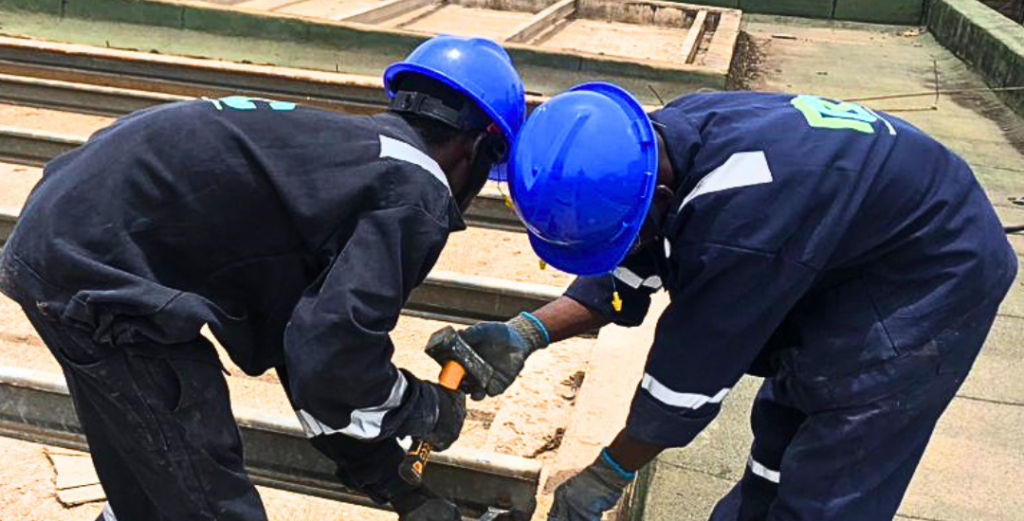
6. Quality Control: Getting the Details Right
There is a major difference between work being completed and work being completed properly.
This is why quality control must remain central throughout the construction process.
Quality should not suddenly become important when the project is approaching handover.
It should be monitored throughout execution.
Are specifications being followed?
Are materials appropriate?
Is workmanship meeting the required standard?
Are measurements correct?
Have completed elements been inspected?
If something does not meet expectations, is it being corrected?
These checks may happen behind the scenes, but they have a direct impact on the client’s final experience.
The client may never know that someone checked a measurement twice.
They may never know that a material was rejected because it did not meet the required standard.
They may never see the internal discussion that prevented an error.
But they will experience the result.
That is why some of the most meaningful examples of going the extra mile in construction are actions the customer may never see.
Quality is customer service made tangible.

7. Managing Challenges: Responding With Ownership
Even carefully planned construction projects can encounter unexpected situations.
Conditions can change.
Supply issues can arise.
Design considerations may evolve.
Weather can affect activities.
Technical challenges may become apparent during execution.
The existence of a challenge does not automatically determine the client’s experience.
The response does.
When something goes wrong, clients need honesty and solutions.
They need to understand what has happened, what impact it may have and what the team intends to do next.
Trying to hide problems or shifting responsibility rarely creates confidence.
Taking ownership does.
A customer-focused team approaches challenges with the mindset:
How do we solve this?
Rather than:
Whose fault is this?
Accountability does not mean pretending mistakes never happen.
It means responding professionally when they do.
Sometimes, the way a difficult situation is handled can build even more trust than a project where the relationship was never tested.
8. Progress Updates: Making the Journey Visible
For construction professionals who work on a site every day, progress is easy to see.
For the client, it may not be.
This is particularly true when clients are not regularly present on site.
Regular progress updates help bridge that gap.
Photos, videos, meetings, reports and milestone updates can help clients understand how their project is developing.
But meaningful progress reporting should go beyond simply sending pictures.
Where necessary, updates should provide context.
What has been completed?
What is currently happening?
What comes next?
Are there decisions the client needs to make?
Are there important changes or issues to understand?
Clear updates help clients feel connected to their project.
And connection builds confidence.
9. Handover: More Than Passing Over the Keys
Eventually, every project approaches one of its most significant milestones:
Handover.
For the client, this is often the moment they have been waiting for.
Something that once existed as an idea is now real.
But excellent project handover should be more than a ceremonial exchange of keys.
It is an opportunity to ensure that the client understands what has been delivered and feels confident moving into the next stage of ownership or use.
Outstanding items should be properly addressed.
Relevant information should be communicated.
The project should be presented with the same attention to detail that guided its construction.
The goal should not be simply to reach the finish line.
It should be to finish well.
Because the final stages of a project can strongly influence how the client remembers the entire experience.

10. Beyond Handover: Relationships Should Outlive Projects
Construction may have an end date.
Good relationships do not necessarily have to.
A client who has had a positive experience may return with another project.
They may recommend the company to a colleague, friend or business partner.
They may become a long-term partner.
But repeat business and referrals are not created simply by asking for them.
They are earned through the experience that came before.
Was the client respected?
Was communication clear?
Was the team dependable?
Was quality protected?
Did people take ownership?
And when the project was completed, did the company remain responsive?
Customer-focused construction recognises that every project contributes to a much longer story: the company’s reputation.
A building can stand for decades.
So can the impression created while building it.

The Extra Mile Exists at Every Stage
Customer Service Week’s “The Extra Mile” theme provides a useful reminder that exceptional service is rarely one dramatic action.
In construction, the extra mile exists throughout the journey.
It is listening carefully during consultation.
It is asking another question during planning.
It is communicating before the client has to chase for an update.
It is identifying a problem early.
It is refusing to compromise on safety.
It is checking the workmanship again.
It is taking responsibility when something goes wrong.
It is ensuring that handover feels like the completion of a promise rather than simply the end of a contract.
And it is remaining committed to the relationship after construction is complete.
Putting the Customer at the Heart of What We Build
At Rosettee Construction, buildings and infrastructure may be the visible results of our work, but behind every project is something much more personal.
There is a vision.
There is an investment.
There are expectations.
And there is trust.
Putting the customer at the heart of a construction project does not mean allowing customer service to replace technical expertise.
It means using that expertise in a way that genuinely serves the people who have trusted us with their projects.
From the first conversation to the final handover, every interaction matters.
Every decision matters.
Every detail matters.
Because ultimately, clients may remember the building we delivered.
But they will also remember what it was like to build it with us.
This Customer Service Week, our commitment remains simple:
To listen better.
To communicate clearly.
To build responsibly.
To deliver with excellence.
And, whenever possible, to go the extra mile.
Rosettee Construction — Build your dream with us…